
Programme Management
Every delegate accounted for, gate to gate.
Registration, arrivals, transfers, rooming, and daily movement for groups travelling in Cuba.
Why it matters
This is the unglamorous half of a programme, and the half that decides whether a client comes back. Everything in it is measured against one question - did a delegate ever have to wonder what happens next?
Most of this work is invisible when it goes right, which makes it easy to underestimate at brief stage. The parts that most often go wrong are the seams: the gap between landing and the hotel, the morning a group splits into three vehicles, the afternoon someone needs a pharmacy.
We plan those seams first and let the rest fall around them. A delegate should be able to move through a week in Cuba without once needing to ask a question that the plan should already have answered.
What we manage
The work this covers.
Registration and delegate communications
Pre-travel information collected and distributed on a schedule rather than in a scramble.
Flight manifest and arrival tracking
Arrivals monitored and meets adjusted as flights move.
Airport meet-and-greet and transfers
Staffed arrivals at Jose Marti, with vehicles matched to group size and luggage reality.
Room blocks and rooming list management
Allocation, changes, and the inevitable late substitutions.
Daily movement plans and vehicle allocation
A published plan for each day, with timings that hold up.
Bilingual host team
Staff attached to the group for the duration rather than met at each stop.
Incident and medical escalation protocol
A written path for when something goes wrong, agreed before departure.
How we approach it
The order the decisions get made in.
-
Step 1
Plan for the arrival curve, not the arrival time
Groups land across hours rather than minutes, and the welcome has to hold for all of it.
-
Step 2
Publish timings you can defend
Transfer estimates reflect actual road conditions rather than map distances.
-
Step 3
Assume the network is not there
Every delegate-facing plan works on paper as well as on a phone.
What this means in Cuba
The part a global agency cannot write for you.
- Jose Marti arrivals and customs clearance take longer than most European or North American planning assumptions allow, and meet-and-greet staffing is sized for that rather than for the schedule on paper.
- Vehicle typology is chosen deliberately between coach, minibus, and a classic car convoy, and transfer times are quoted against real road conditions.
- Connectivity is limited enough that delegate communication is built with a printed and offline fallback. No plan depends on a messaging app working.
- Accommodation is often a mix, with a hotel block for the core group and boutique properties or casas for smaller cohorts. Knowing when to split is part of the planning.
Scale
What size this works at
10 to 200 delegates, single or multi-city.
Ideal for
- Groups of mixed travel experience
- Programmes with multi-city movement
- Clients who need a single operational contact on the ground
Where this happens
Destinations this service most often runs in.
Destination
Havana
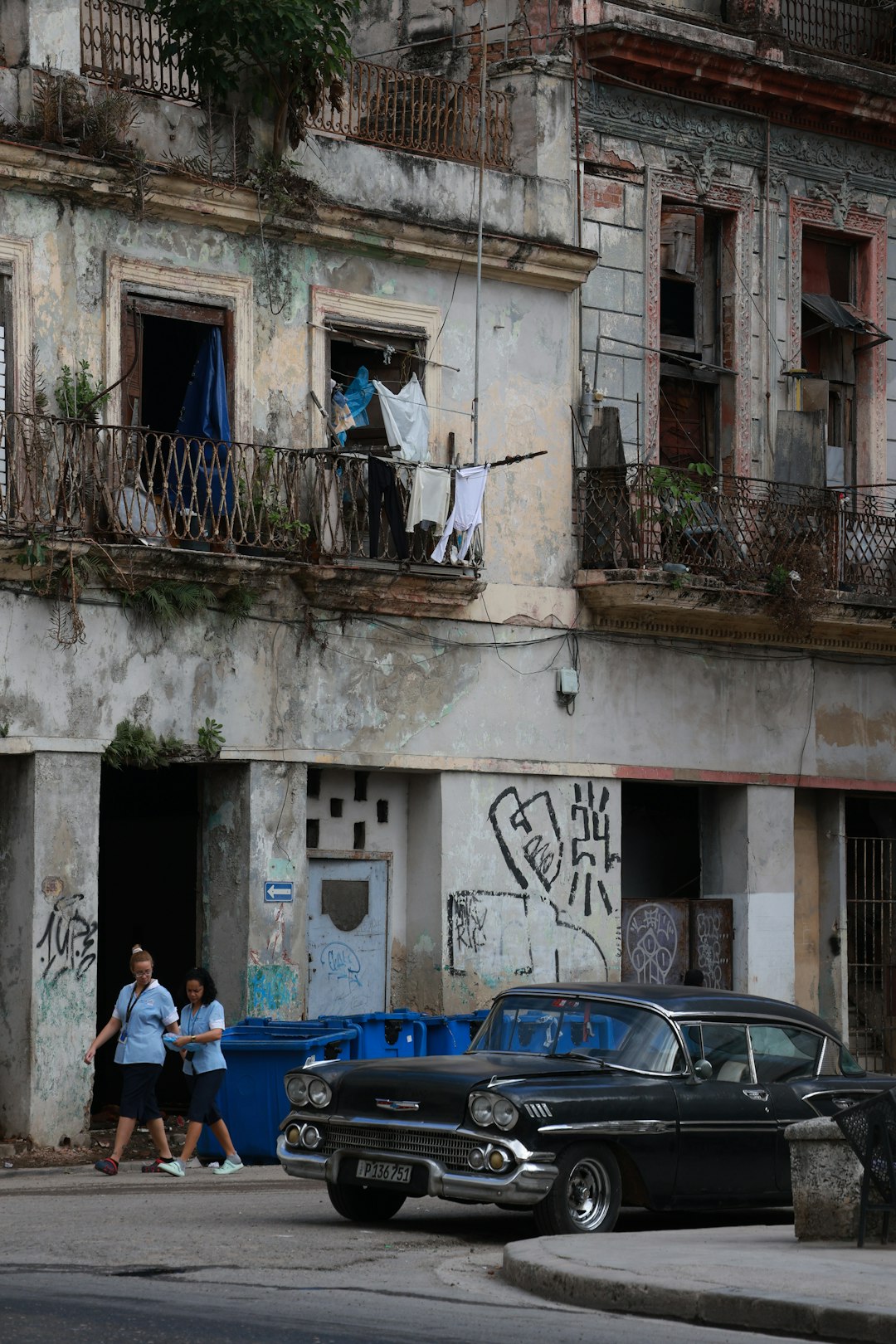
Cuba's capital is the emotional gateway to the island, where heritage, street life, music, and architecture all live close together.

Destination
Varadero
A coastal destination suited to travelers who want beach time and a softer final chapter after a cultural route.

Destination
Trinidad
A colonial city with cobblestone streets, colorful facades, and a cultural atmosphere that rewards slow exploration.
Works alongside
Services that usually run with this one.
Programme Management
Corporate Programme Management
End-to-end management of corporate programmes in Cuba, from budget construction to post-programme reconciliation.
Organisations running a Cuba programme for the first time
Explore this service
Programme Management
Permits, Compliance & Documentation
Entry documentation, permits, customs, and supplier due-diligence support for organisations bringing groups to Cuba.
Organisations with an internal compliance review
Explore this service